
Condenser air removal
Continuously removes air and non-condensable gases to support the specified condenser operating pressure.
APPLICATIONS · POWER GENERATION
From turbine condensers to waterboxes and gland systems, liquid ring solutions are engineered around wet-gas load, air leakage, service liquid and redundancy requirements.
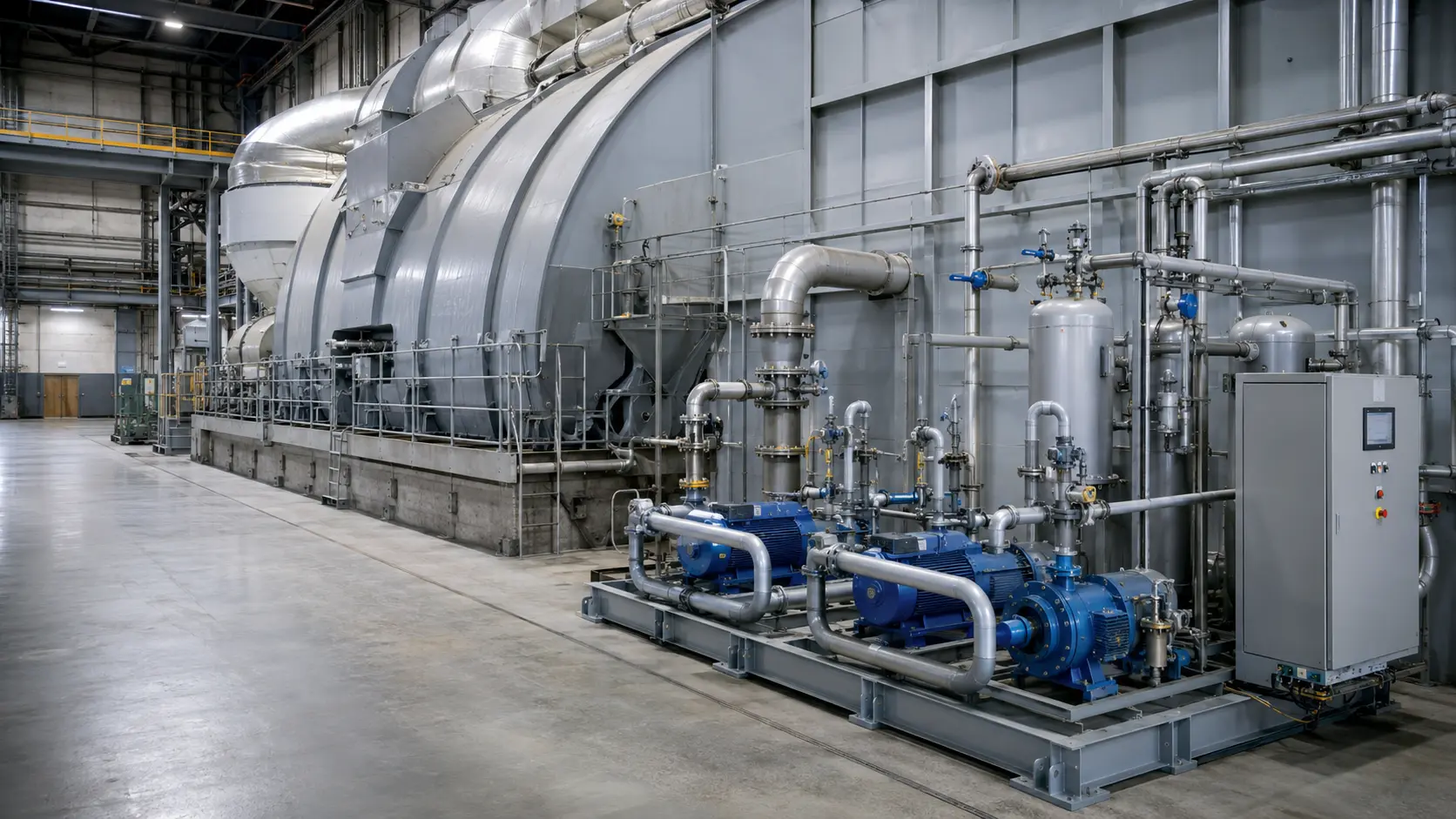
Condenser evacuation is not selected from ultimate pressure alone. Hogging time, continuous air leakage, saturated gas load, condenser pressure, service-liquid temperature and operating philosophy are considered together.
Continuously removes air and non-condensable gases to support the specified condenser operating pressure.
Start-up evacuation and continuous holding are treated as separate operating points.
Removes trapped air from cooling-water lines to support siphon establishment and limit air pockets.
Handles excess steam and air, with condensate managed through separation and drainage.
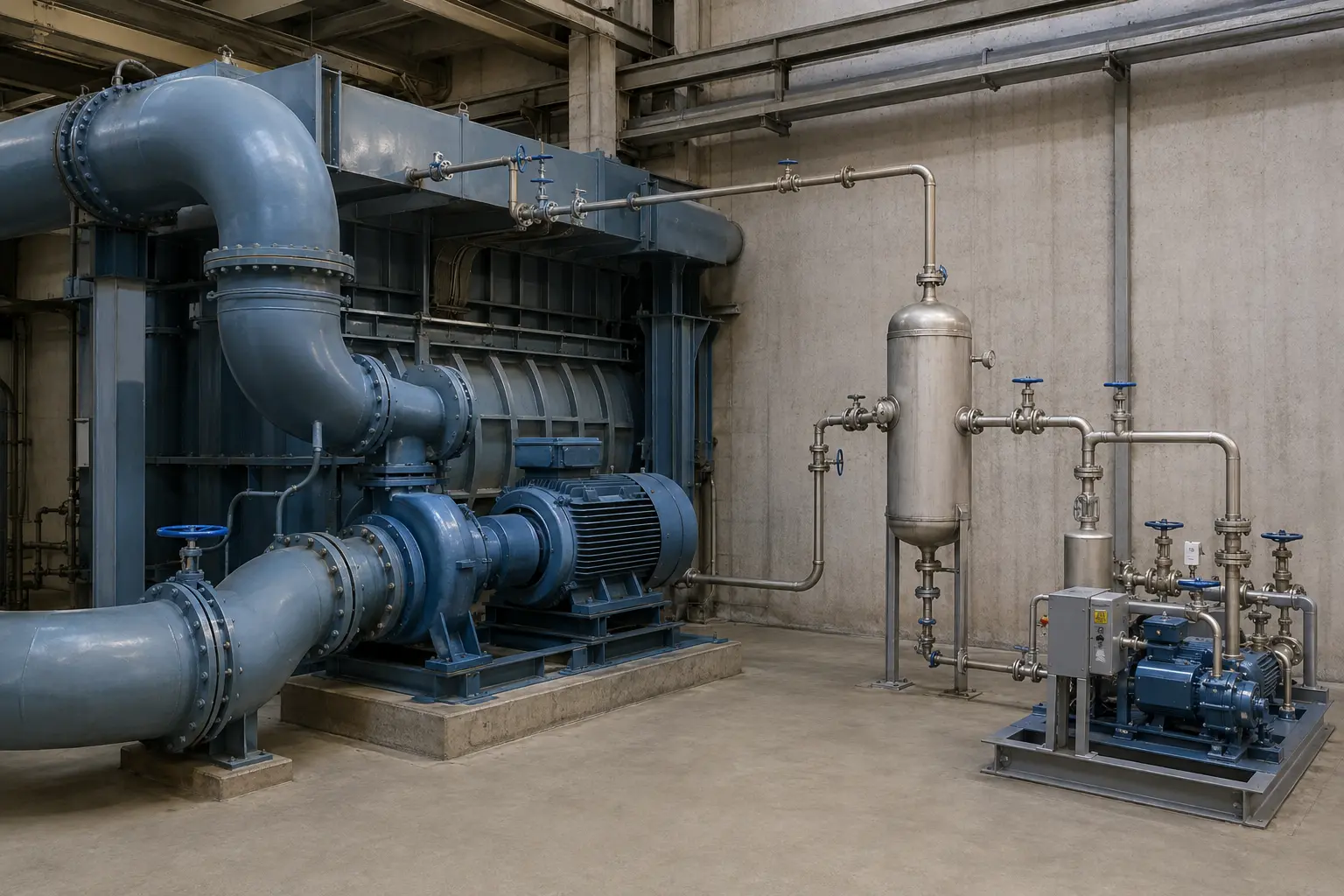
A vacuum receiver, priming valve and separation arrangement help establish siphon while limiting water carry-over to the pump.
Pump and auxiliaries are designed as one system around four data groups.
Talk to Our Technical TeamDefine hogging, holding, waterbox and gland duties with pressure, time and load profile.
Provide air leakage, non-condensable flow, water-vapour fraction, suction temperature and condenser pressure.
Service-liquid temperature, quality and flow influence performance, circulation layout and material selection.
Include duty/standby needs, automatic sequencing, instrumentation, isolation and project standards.
Family values are catalogue ranges; actual performance depends on suction and service-liquid conditions.
Published family ranges are indicative. Final selection must be checked at the actual operating pressure, gas or material load, temperature, duty cycle and installation conditions.
Reliable performance depends on the pump or blower, protection equipment, line arrangement, controls and the real process operating point.
Capacity and pressure are checked together at the actual inlet conditions and duty cycle.
Share Operating DataFilters, separators, condensers, receivers and valves are selected around moisture, particles, liquid carry-over and process risk.
Review the Process LoadPipework, controls, isolation, accessibility and redundancy are included in the final system architecture.
Explore Liquid Ring PumpsSend plant type, condenser data, hogging time, holding pressure, gas load, suction and service-water temperatures, waterbox volume and redundancy requirements.