
Aeration air supply
Blowers provide air at the flow and pressure required by basin depth, diffusers and the distribution network.
APPLICATIONS · WATER & WASTEWATER
Aeration, filtration, priming and chemical or sludge transfer are treated as separate duties, each with its own flow, pressure, fluid properties and operating pattern.
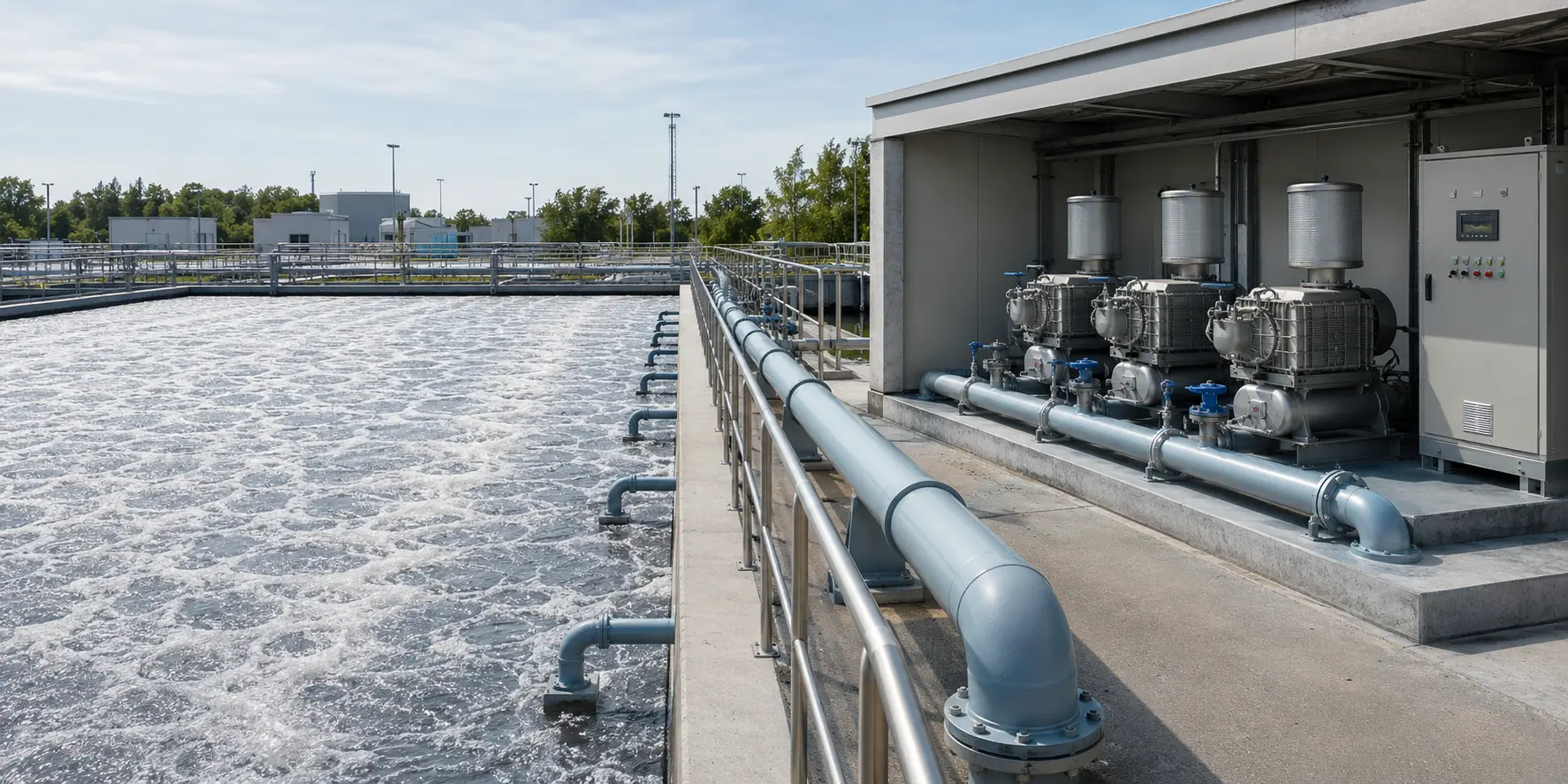
Aeration air is selected from oxygen demand and backpressure; filtration and priming depend on wet-gas load; sludge and chemical transfer depend on fluid and material compatibility.
Blowers provide air at the flow and pressure required by basin depth, diffusers and the distribution network.
Wet-gas-capable vacuum equipment supports suitable filtration and dewatering duties.
Air can be removed from pump suction lines and vessels using a protected vacuum arrangement.
Air-operated diaphragm pumps can handle selected fluids when materials and solids content are compatible.
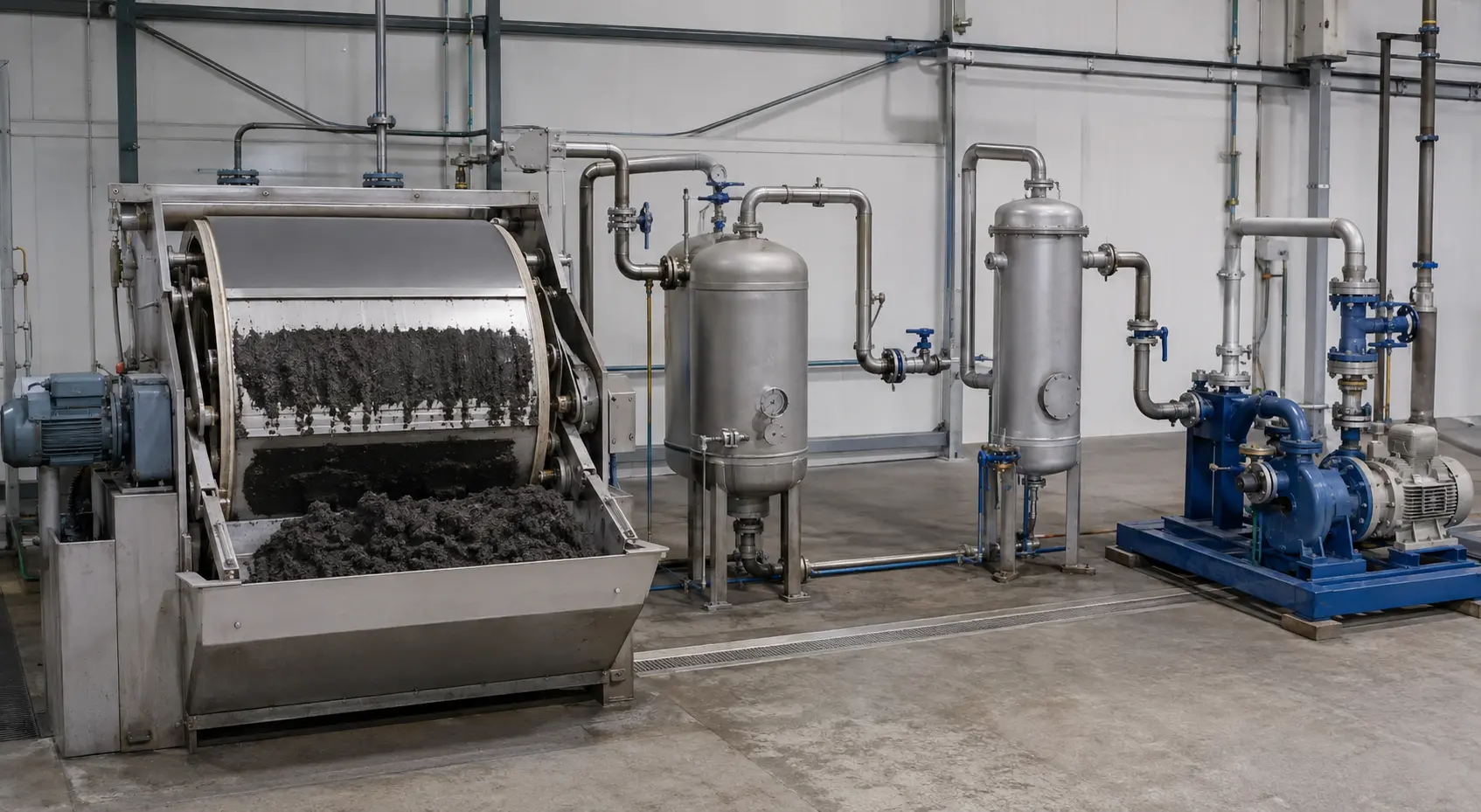
Receiver, separator and moisture-protection arrangements help control filtrate and protect the vacuum source.
Each process has a different sizing basis and material requirement.
Talk to Our Technical TeamState air flow and backpressure for aeration or gas load and operating vacuum for filtration and priming.
Provide pH, temperature, density, viscosity, solids size and concentration.
Include basin depth, diffusers, pipework, valves, filters, receivers and separators.
Define operating hours, duty/standby needs, ambient conditions and any hazardous-area classification.
Final selection follows the actual operating point and material compatibility review.
Published family ranges are indicative. Final selection must be checked at the actual operating pressure, gas or material load, temperature, duty cycle and installation conditions.
Reliable performance depends on the pump or blower, protection equipment, line arrangement, controls and the real process operating point.
Capacity and pressure are checked together at the actual inlet conditions and duty cycle.
Share Operating DataFilters, separators, condensers, receivers and valves are selected around moisture, particles, liquid carry-over and process risk.
Review the Process LoadPipework, controls, isolation, accessibility and redundancy are included in the final system architecture.
Explore Related EquipmentProvide flow, pressure or vacuum, fluid and solids properties, system resistance, operating time, redundancy and environment data.