
Controlled evacuation
Helps the package or machine chamber reach the specified pressure within the available cycle time.
APPLICATIONS · PACKAGING & FOOD
The pump or central system is selected around the product, evacuation volume, cycle time and vapour load so the packaging machine reaches its target pressure consistently.
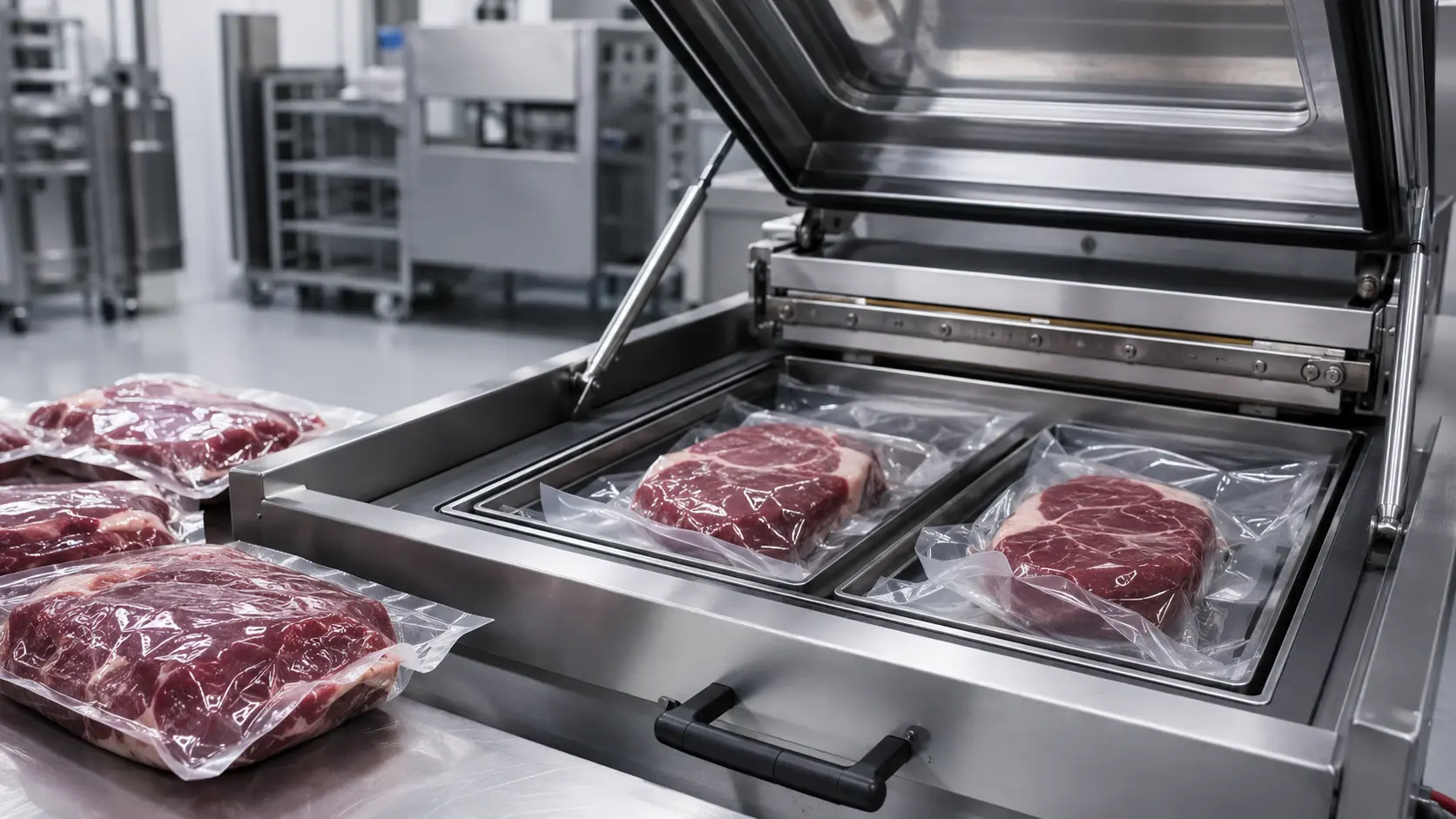
Product type, package material, sealing quality and storage conditions all influence the result. The vacuum source must also account for the real chamber volume, pipework and any moisture released by the product.
Helps the package or machine chamber reach the specified pressure within the available cycle time.
Correct capacity and line sizing support a stable vacuum source during consecutive packaging cycles.
Connection size, pressure loss, installation layout and operating conditions are assessed together.
Multiple packaging machines can be served by a shared, controlled vacuum infrastructure.
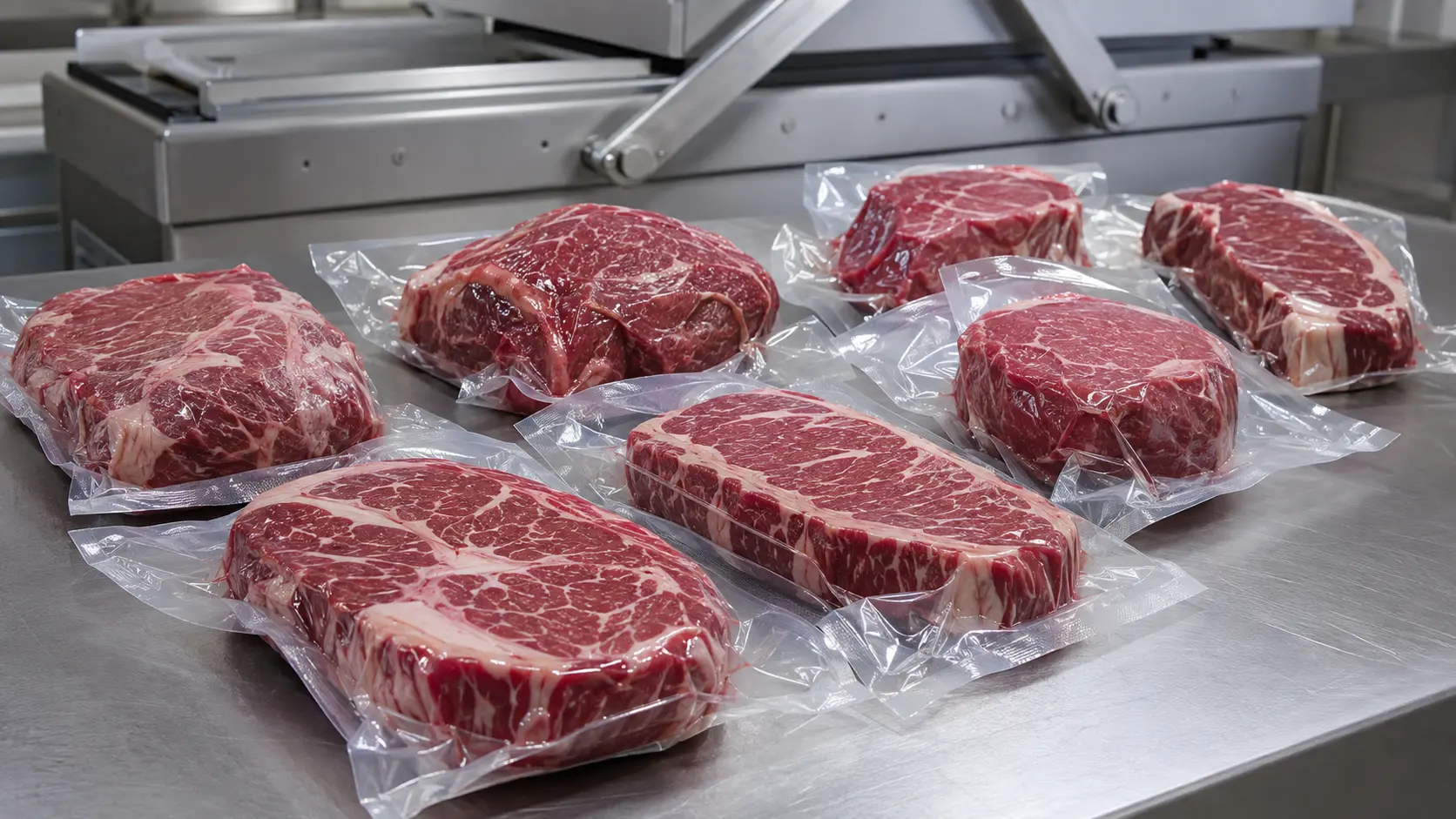
Package appearance and integrity depend on product structure, barrier material, target pressure and sealing parameters.
A sound selection starts with four groups of process data.
Talk to Our Technical TeamCalculate the actual volume evacuated in each cycle, including the pipework and buffer vessel where used.
The required vacuum level and time available to reach it determine the pumping requirement.
Condensable vapour and product-related gas loads influence pump technology and protective equipment.
One machine, simultaneous lines and shift patterns require different system architectures.
Published values are for 50 / 60 Hz. Final selection follows calculation of evacuation volume, cycle time, line loss and operating conditions.
Published family ranges are indicative. Final selection must be checked at the actual operating pressure, gas or material load, temperature, duty cycle and installation conditions.
Reliable performance depends on the pump or blower, protection equipment, line arrangement, controls and the real process operating point.
Capacity and pressure are checked together at the actual inlet conditions and duty cycle.
Share Operating DataFilters, separators, condensers, receivers and valves are selected around moisture, particles, liquid carry-over and process risk.
Review the Process LoadPipework, controls, isolation, accessibility and redundancy are included in the final system architecture.
Explore ASV ModelsSend the package or chamber volume, target pressure, cycle time, product temperature, machine count and operating pattern so we can define the appropriate vacuum source.