
Entrained-air removal
Helps release trapped air and gas from the product under controlled vacuum.
APPLICATIONS · MIXING & DEGASSING
Complete systems combine controlled mixing and degassing, with chamber volume, drive, impeller geometry and vacuum source configured around the product.
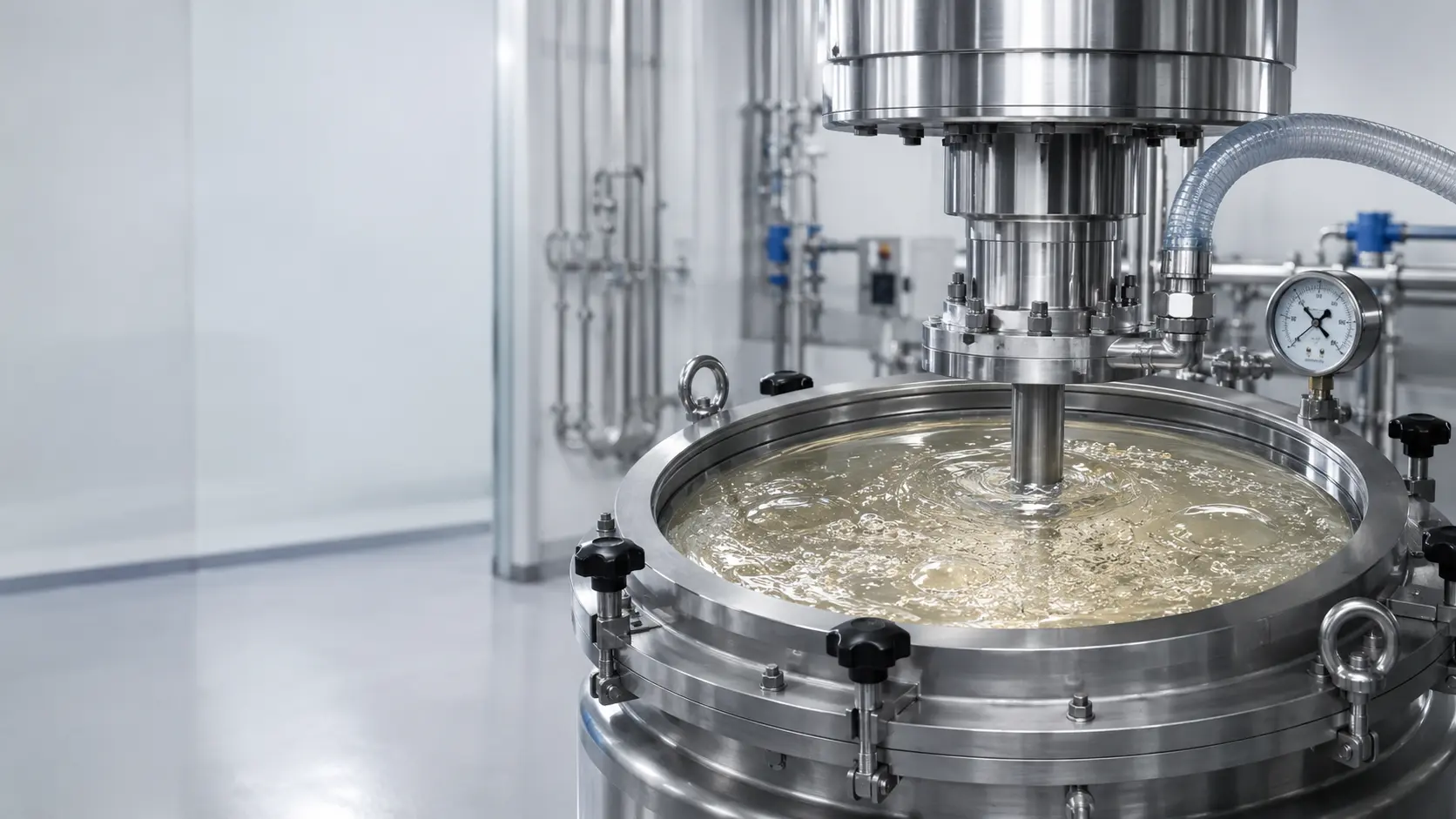
Vacuum mixing can be used for resins, silicones, adhesives and other products where air-bubble control matters. The result depends on viscosity, temperature, vacuum level, mixing geometry and process time.
Helps release trapped air and gas from the product under controlled vacuum.
Combines mixing and degassing in one chamber for a controlled process sequence.
Reduces unwanted air before filling, coating, casting or moulding.
Motor, gearbox, speed and impeller design are selected around product viscosity.
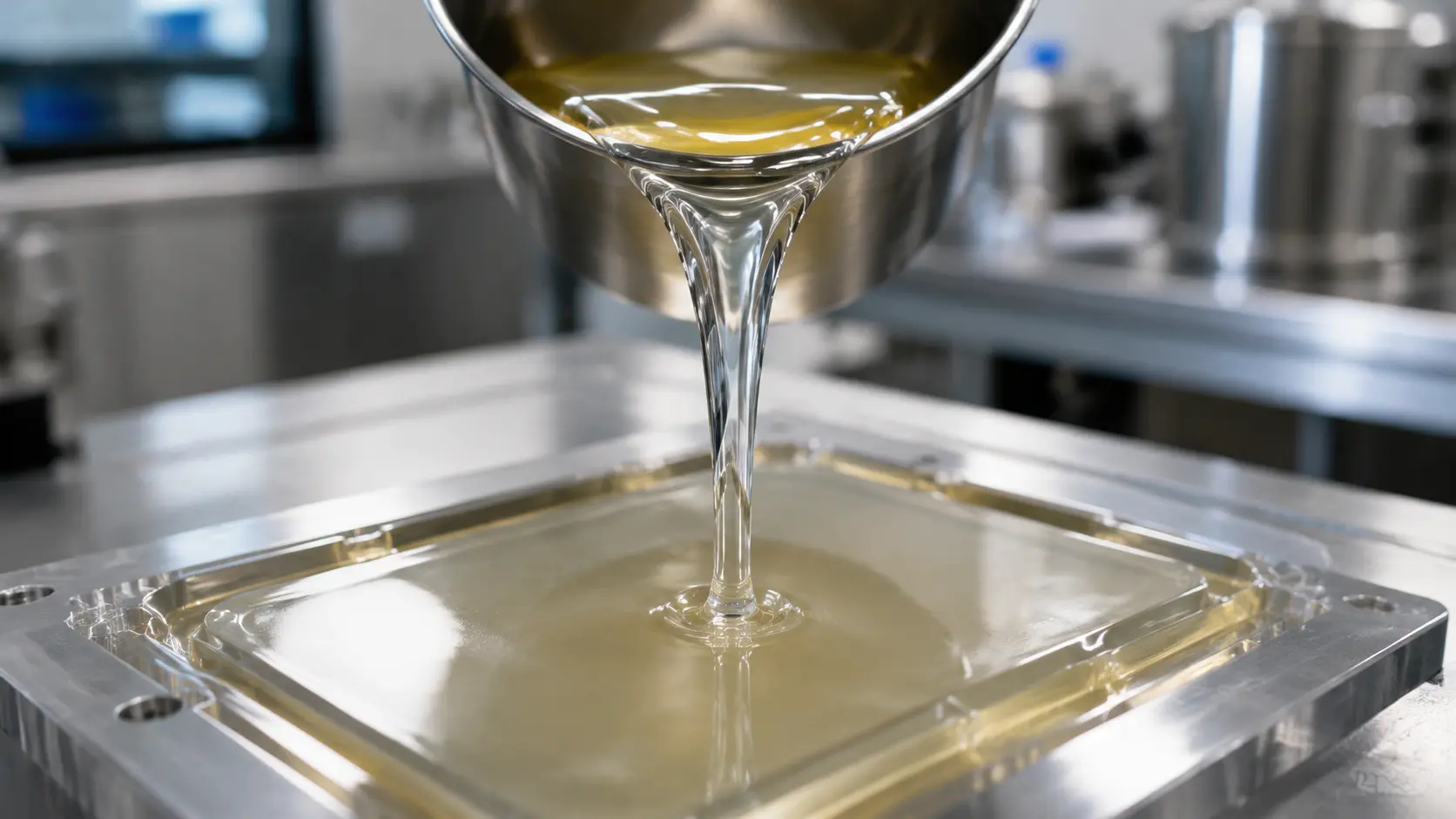
Surface quality and residual bubble level depend on product viscosity, temperature, mixing geometry, target vacuum and process time.
Mixing equipment and the vacuum pump are selected together from the actual product data.
Talk to Our Technical TeamUse safe working fill rather than nominal chamber volume as the design basis.
Viscosity directly affects drive power, gearbox selection and impeller geometry.
Assess it together with gas load, foaming behaviour and process time.
These conditions influence pump technology, separation and connection hardware.
Standard VMO chamber sizes establish the platform; mixing drive and vacuum source remain process-specific.
Published family ranges are indicative. Final selection must be checked at the actual operating pressure, gas or material load, temperature, duty cycle and installation conditions.
Reliable performance depends on the pump or blower, protection equipment, line arrangement, controls and the real process operating point.
Capacity and pressure are checked together at the actual inlet conditions and duty cycle.
Share Operating DataFilters, separators, condensers, receivers and valves are selected around moisture, particles, liquid carry-over and process risk.
Review the Process LoadPipework, controls, isolation, accessibility and redundancy are included in the final system architecture.
Explore Vacuum ChambersProvide batch quantity, viscosity, temperature, target vacuum, mixing expectation and process time so we can define the chamber, drive and pump.