
Granule and powder feeding
Closed pneumatic transfer can feed machines and storage points using controlled airflow.
APPLICATIONS · PLASTICS · RUBBER · RESIN
Different duties—from granule conveying to extruder degassing and composite infusion—require different pressure ranges, gas handling and protection equipment.
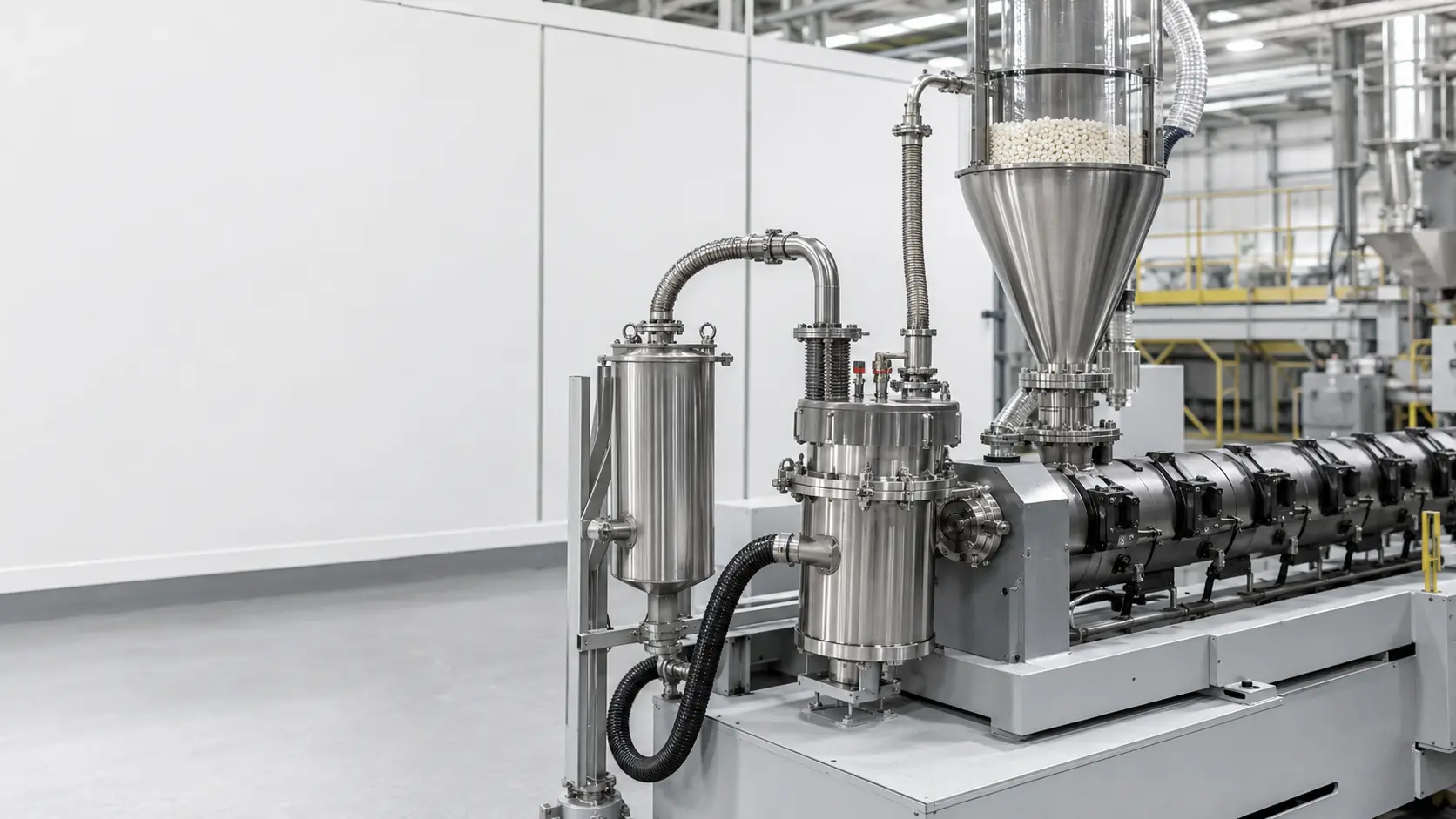
Dry granule transfer, hot extruder vapour, thermoforming leakage and resin degassing impose different requirements. The vacuum source and protective equipment must be selected from the actual process load.
Closed pneumatic transfer can feed machines and storage points using controlled airflow.
Vacuum removes air, moisture and volatile components from the melt through a protected extraction line.
Vacuum supports thermoforming, profile calibration and holding where leakage and cycle time are known.
Degassing and infusion systems help control entrained air before and during mould filling.
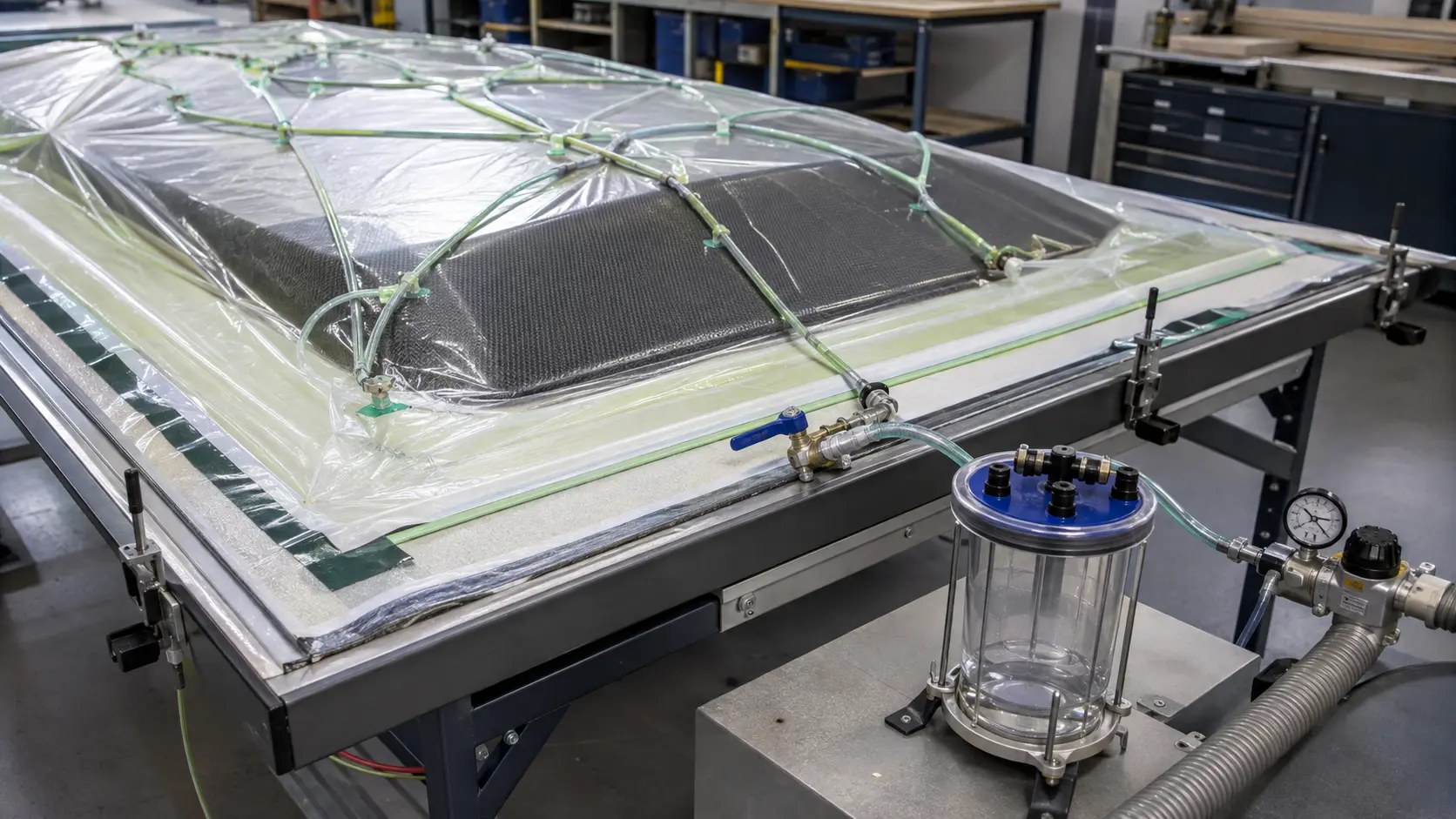
Mould sealing, laminate geometry, resin viscosity, line arrangement and resin trap protection define the operating requirement.
The same plant may require more than one vacuum technology.
Talk to Our Technical TeamDefine conveying, extrusion, forming, calibration, mixing, degassing or infusion as separate operating points.
Temperature, vapour, monomer, dust and resin carry-over determine protection and pump suitability.
Specify operating vacuum, leakage or gas load, evacuation time and continuous or batch duty.
Filters, condensers, knock-out vessels and resin traps protect the vacuum source.
The related families cover high-flow conveying, deeper clean vacuum, wet gas loads and controlled mixing.
Published family ranges are indicative. Final selection must be checked at the actual operating pressure, gas or material load, temperature, duty cycle and installation conditions.
Reliable performance depends on the pump or blower, protection equipment, line arrangement, controls and the real process operating point.
Capacity and pressure are checked together at the actual inlet conditions and duty cycle.
Share Operating DataFilters, separators, condensers, receivers and valves are selected around moisture, particles, liquid carry-over and process risk.
Review the Process LoadPipework, controls, isolation, accessibility and redundancy are included in the final system architecture.
Explore Product FamiliesProvide the process step, material, gas or vapour load, temperature, target pressure, capacity, cycle and required separation equipment.