
Vacuum mixing and deaeration
Helps reduce entrained air in creams, gels, liquids and suitable formulations during controlled mixing.
APPLICATIONS · PHARMACEUTICALS & COSMETICS
Mixing, degassing, drying, evaporation, filtration and solvent duties are assessed around product sensitivity, vapour load, contamination boundary and cleaning requirements.
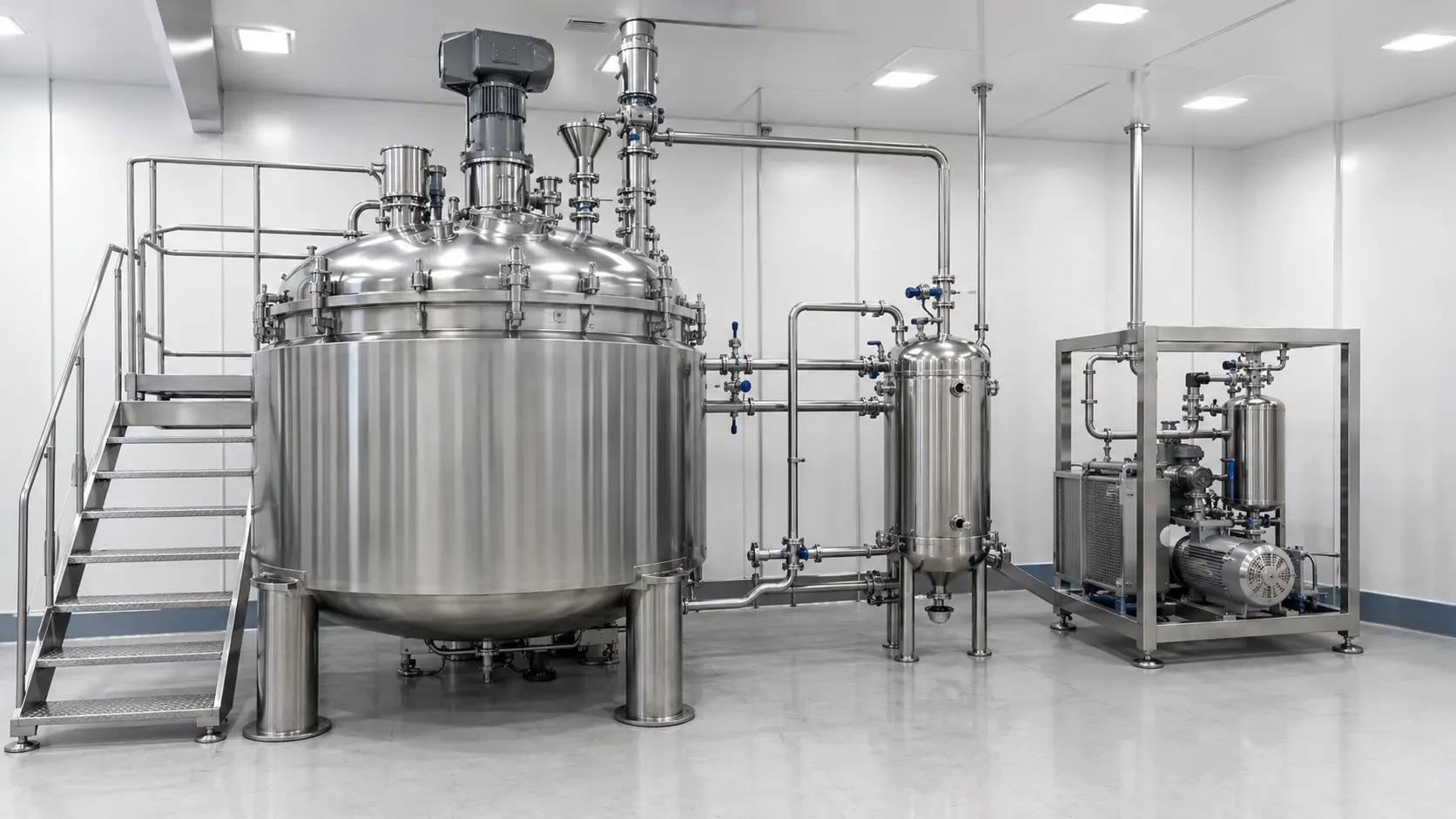
The vacuum source sits outside the product-contact boundary but must be selected with that boundary in mind. Product carry-over, solvents, cleaning method and material compatibility influence every upstream protection stage.
Helps reduce entrained air in creams, gels, liquids and suitable formulations during controlled mixing.
Vacuum can support moisture or solvent removal at reduced temperatures where the process permits.
Pressure difference and compatible transfer equipment support selected filtration and fluid-handling steps.
Condensation and separation protect the vacuum source and support controlled handling of process vapours.
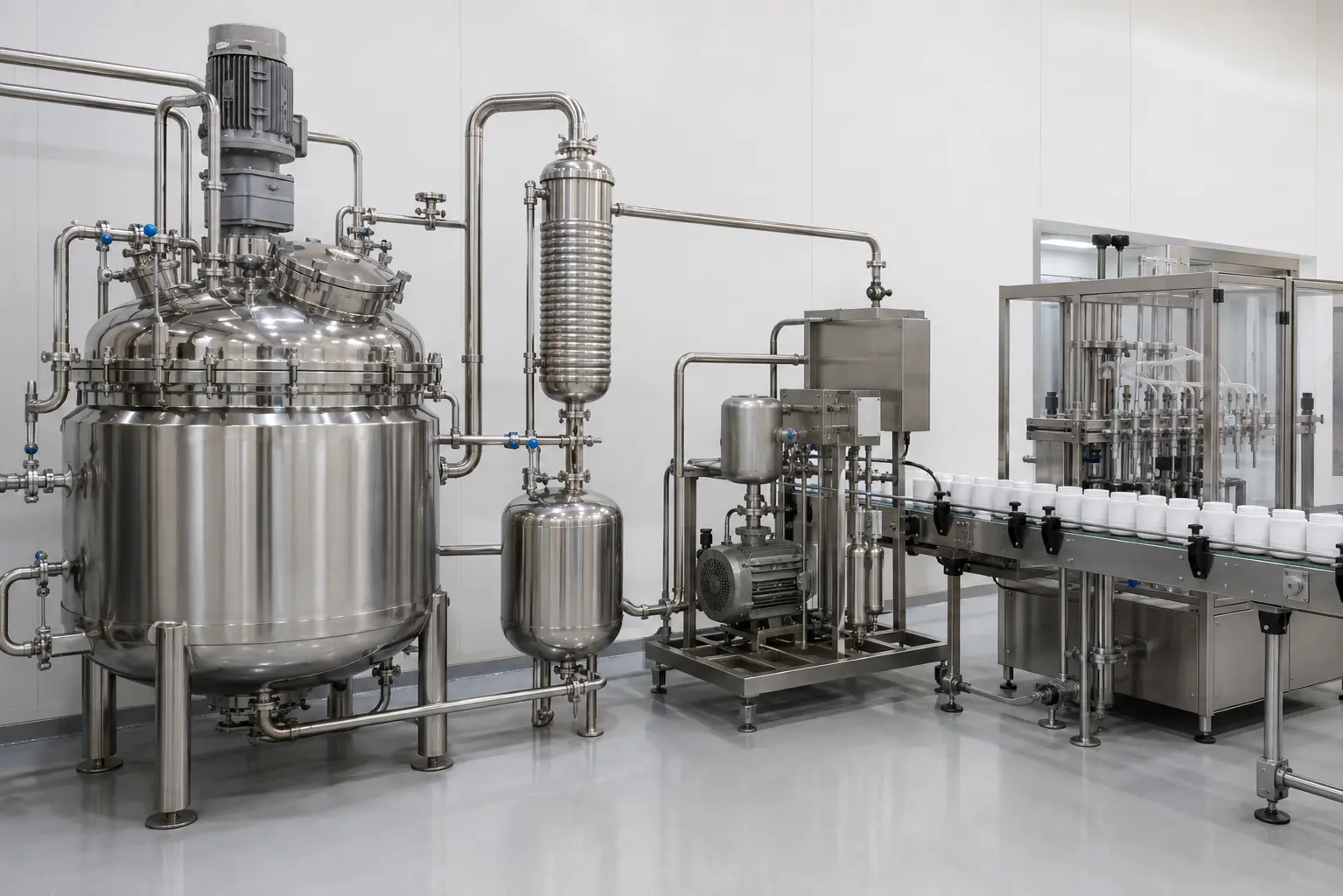
Viscosity, temperature, batch size, mixing geometry, pressure profile and process time determine the final arrangement.
Four groups of information guide the chamber, protection and vacuum-source selection.
Talk to Our Technical TeamDefine formulation, viscosity, temperature and whether the duty is mixing, drying, filtration or distillation.
Provide composition, expected rate, condensability and any hazardous or corrosive characteristics.
Set product-contact materials, seal compatibility, cleaning method and permissible contamination.
Specify vessel volume, fill level, pressure profile, process time, instrumentation and validation needs.
Final design depends on product-contact requirements, gas and vapour load, and the required cleaning and control philosophy.
Published family ranges are indicative. Final selection must be checked at the actual operating pressure, gas or material load, temperature, duty cycle and installation conditions.
Reliable performance depends on the pump or blower, protection equipment, line arrangement, controls and the real process operating point.
Capacity and pressure are checked together at the actual inlet conditions and duty cycle.
Share Operating DataFilters, separators, condensers, receivers and valves are selected around moisture, particles, liquid carry-over and process risk.
Review the Process LoadPipework, controls, isolation, accessibility and redundancy are included in the final system architecture.
Explore Process EquipmentProvide product properties, batch size, temperature, gas or solvent load, pressure profile, cleaning boundary, materials and control requirements.