
Lower-temperature concentration
Vacuum can reduce boiling temperature during evaporation and concentration where the product and process permit.
APPLICATIONS · FOOD & BEVERAGE
From evaporation and concentration to degassing, cooling, filling and material transfer, the system is selected around product behaviour and the real gas or vapour load.
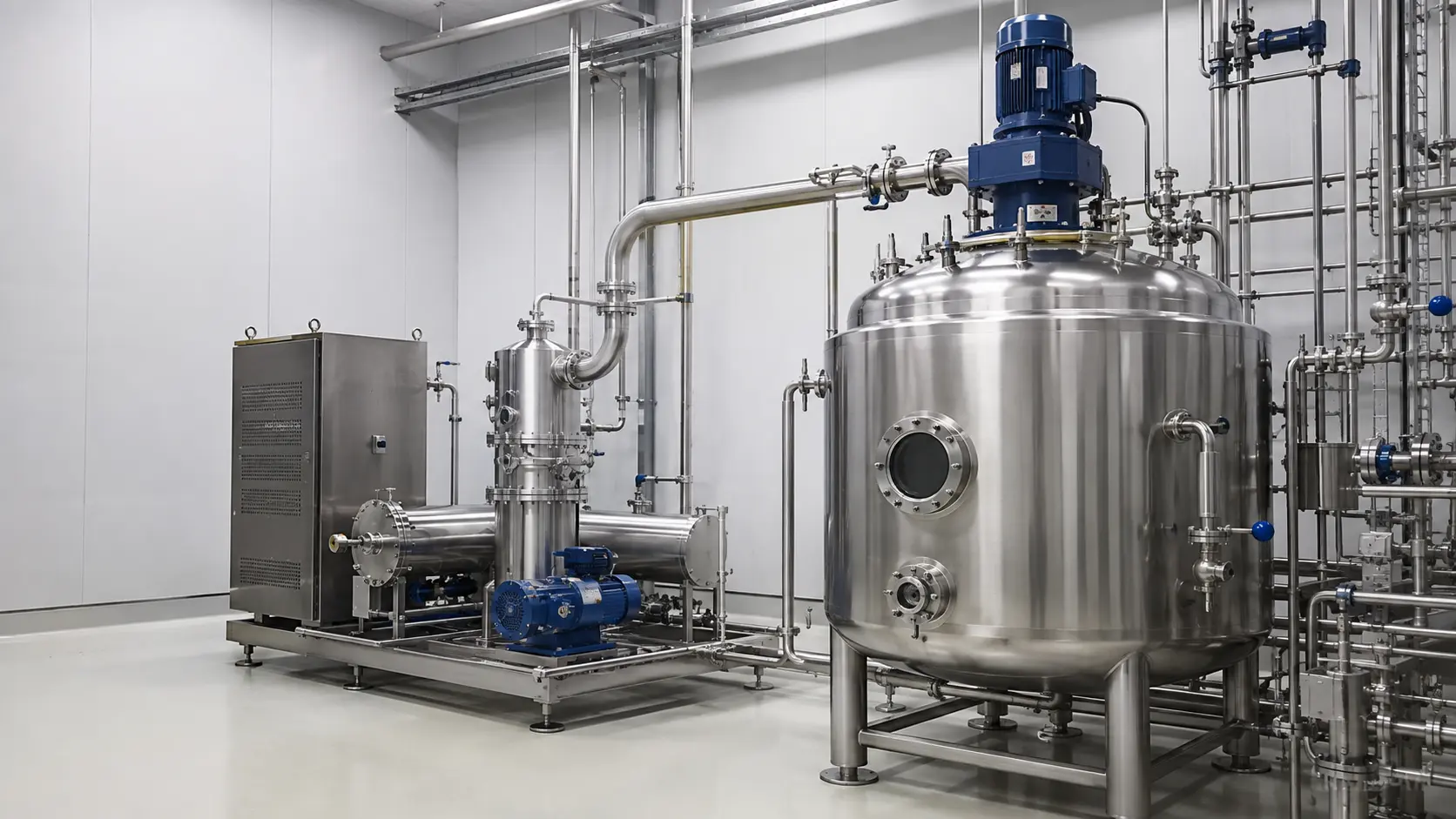
Target pressure alone is not sufficient. Product temperature, viscosity, foaming, moisture and vapour load—and the risk of product carry-over—must be considered together.
Vacuum can reduce boiling temperature during evaporation and concentration where the product and process permit.
Entrained air can be reduced before filling or the next production step.
Controlled evaporation or pressure difference can support suitable cooling and filling processes.
Suitable dry granules and powders can be moved through a filtered, enclosed conveying line.
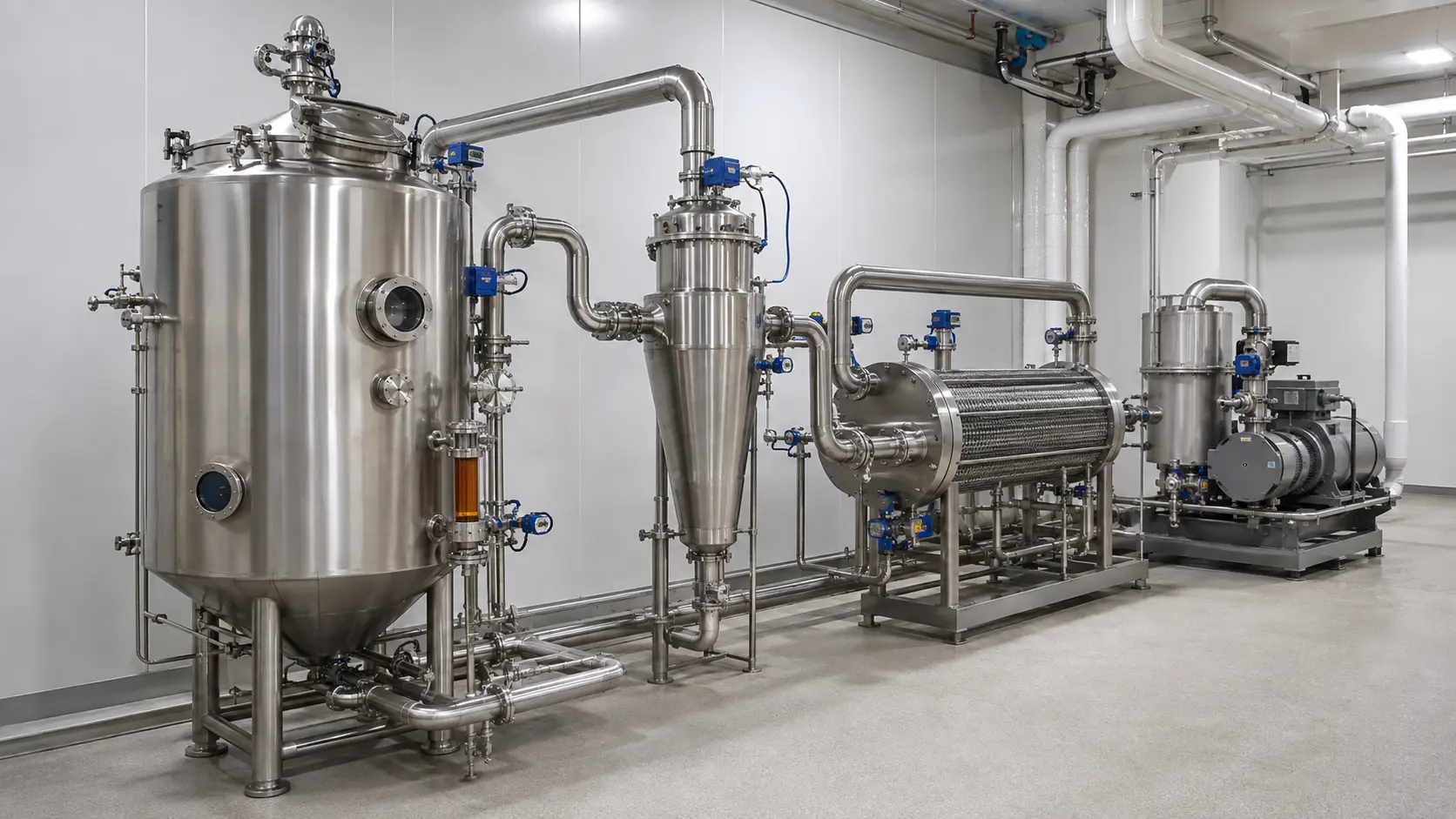
A suitable condenser and separator manage condensable load before the vacuum source, based on temperature, concentration target and operating pressure.
The vacuum system is assessed from the product-contact boundary through to the vacuum source.
Talk to Our Technical TeamLiquid, viscous, foaming, granular or powdered products impose different requirements.
Include product temperature, air, moisture, vapour and continuous leakage.
Define contact materials, seals, connections, cleaning method and separation between product and vacuum source.
Assess batch or continuous operation, cycle time, piping and losses through filters and condensers.
Final selection depends on product compatibility, gas and vapour load, cleaning boundary and operating pattern.
Published family ranges are indicative. Final selection must be checked at the actual operating pressure, gas or material load, temperature, duty cycle and installation conditions.
Reliable performance depends on the pump or blower, protection equipment, line arrangement, controls and the real process operating point.
Capacity and pressure are checked together at the actual inlet conditions and duty cycle.
Share Operating DataFilters, separators, condensers, receivers and valves are selected around moisture, particles, liquid carry-over and process risk.
Review the Process LoadPipework, controls, isolation, accessibility and redundancy are included in the final system architecture.
Explore Product FamiliesProvide product properties, temperature, vapour load, target pressure, batch or continuous duty, cleaning boundary and line conditions for a technical review.