
Lower-temperature processing
Vacuum can support drying, evaporation and concentration at reduced boiling temperatures where the process permits.
APPLICATIONS · CHEMICAL & PROCESS
Drying, distillation and evaporation duties are assessed using real gas and vapour loads, suction temperature, material compatibility and the required operating pressure.
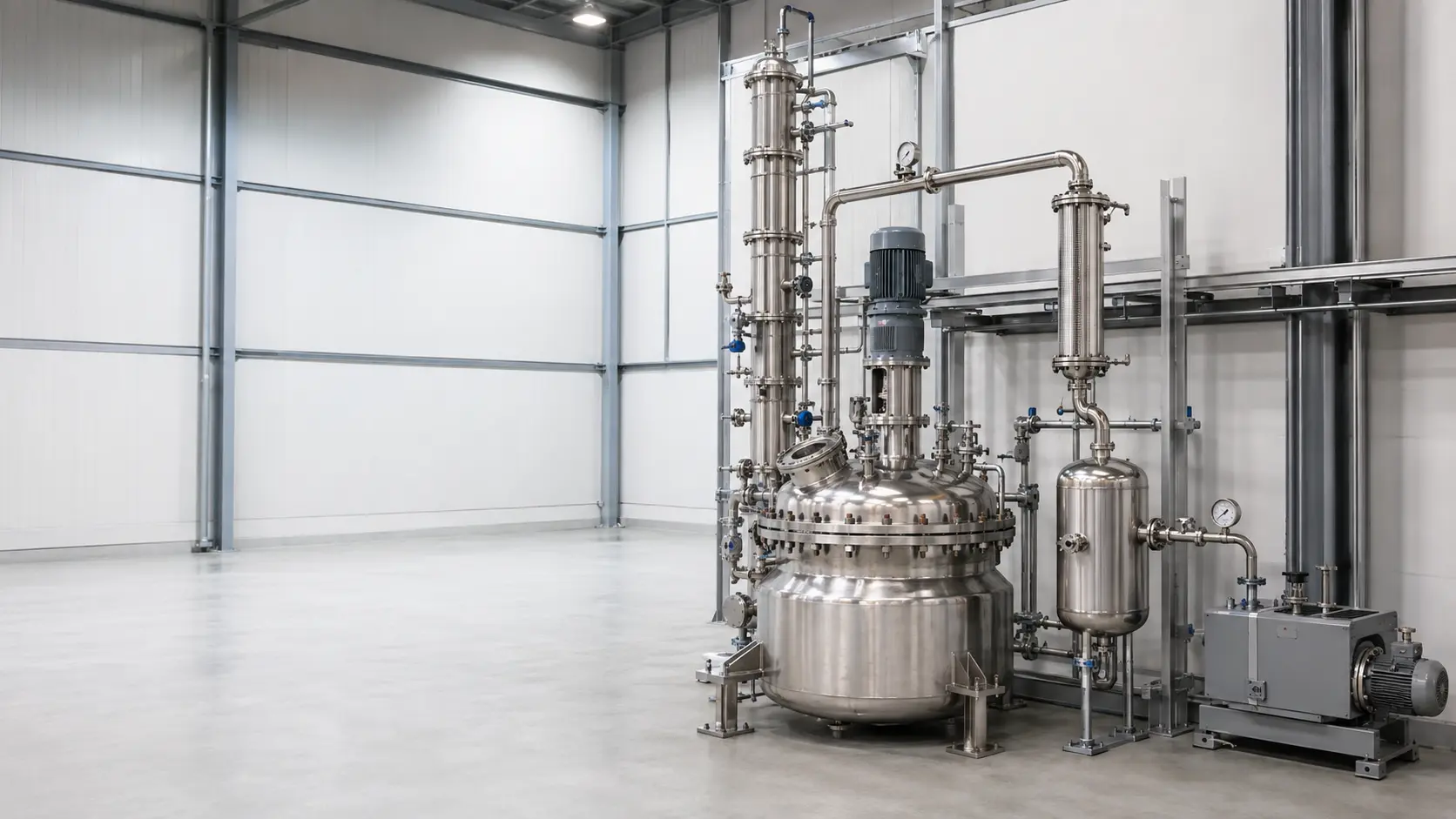
Ultimate pressure alone does not define a chemical-process vacuum system. Vapour composition, condensable load, corrosion risk, service-liquid temperature and the intended operating pattern determine the complete arrangement.
Vacuum can support drying, evaporation and concentration at reduced boiling temperatures where the process permits.
Gas and vapour are removed at a defined operating pressure to support stable process conditions.
Condensers, separators and knock-out vessels help manage liquid and condensable carry-over before the pump.
Materials, seals and service liquid are selected around the handled gas and chemical environment.
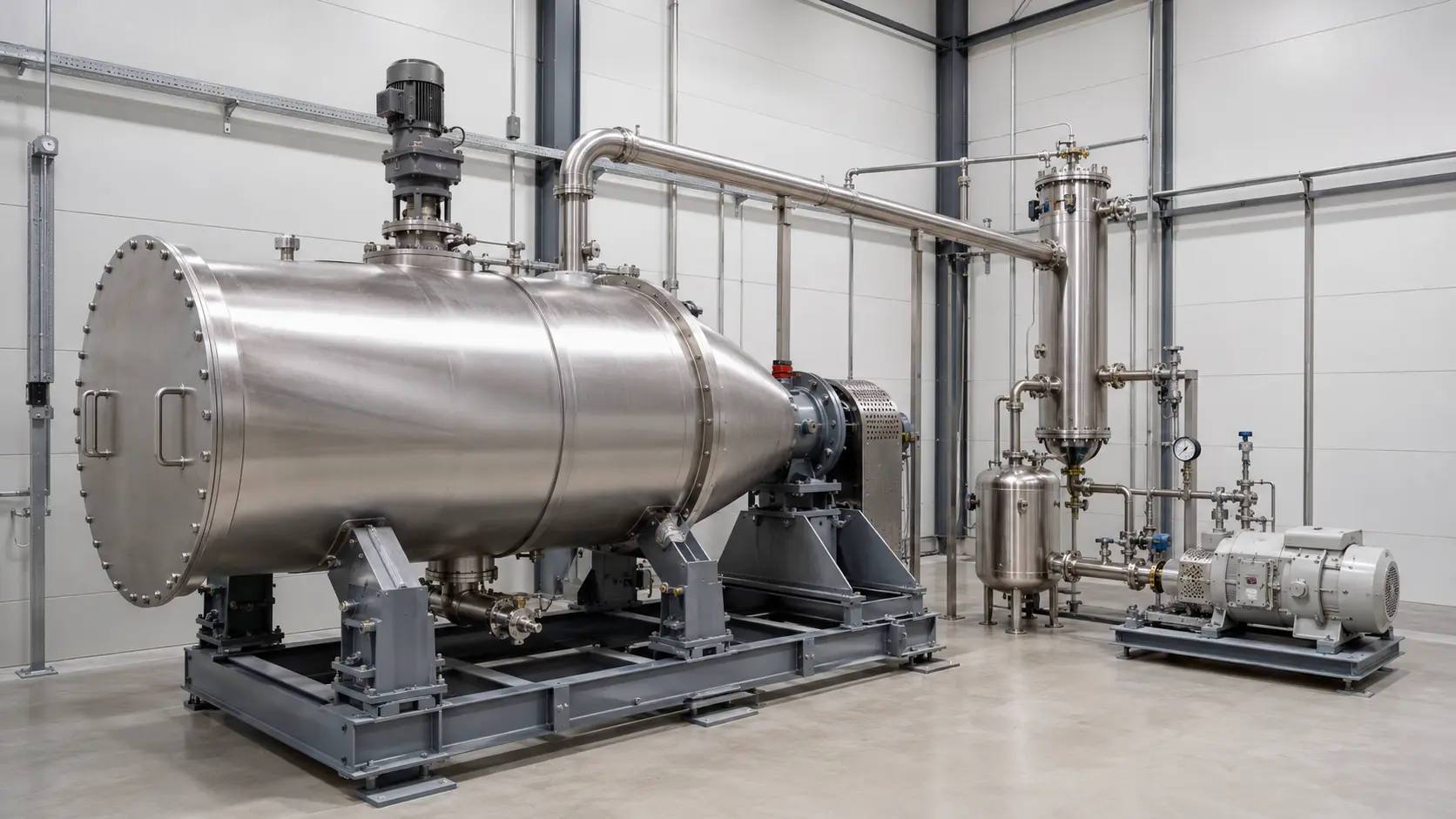
The condenser and separation arrangement is sized from the actual evaporation rate, gas composition, suction temperature and cooling conditions.
The starting point is a clear definition of the process and utility conditions.
Talk to Our Technical TeamDefine the normal pressure range, start-up condition and any transient operating points.
Provide composition, mass flow, condensable fraction, suction temperature and expected liquid carry-over.
Review corrosion, contamination limits, seal compatibility and available service-liquid quality.
Continuous or batch duty, redundancy, instrumentation and cleaning requirements shape the architecture.
Family ranges are indicative. Actual performance changes with suction conditions and service-liquid temperature.
Published family ranges are indicative. Final selection must be checked at the actual operating pressure, gas or material load, temperature, duty cycle and installation conditions.
Reliable performance depends on the pump or blower, protection equipment, line arrangement, controls and the real process operating point.
Capacity and pressure are checked together at the actual inlet conditions and duty cycle.
Share Operating DataFilters, separators, condensers, receivers and valves are selected around moisture, particles, liquid carry-over and process risk.
Review the Process LoadPipework, controls, isolation, accessibility and redundancy are included in the final system architecture.
Explore Liquid Ring PumpsProvide the gas and vapour composition, flow, suction temperature, target pressure, materials, service-liquid conditions and duty cycle for a technical review.